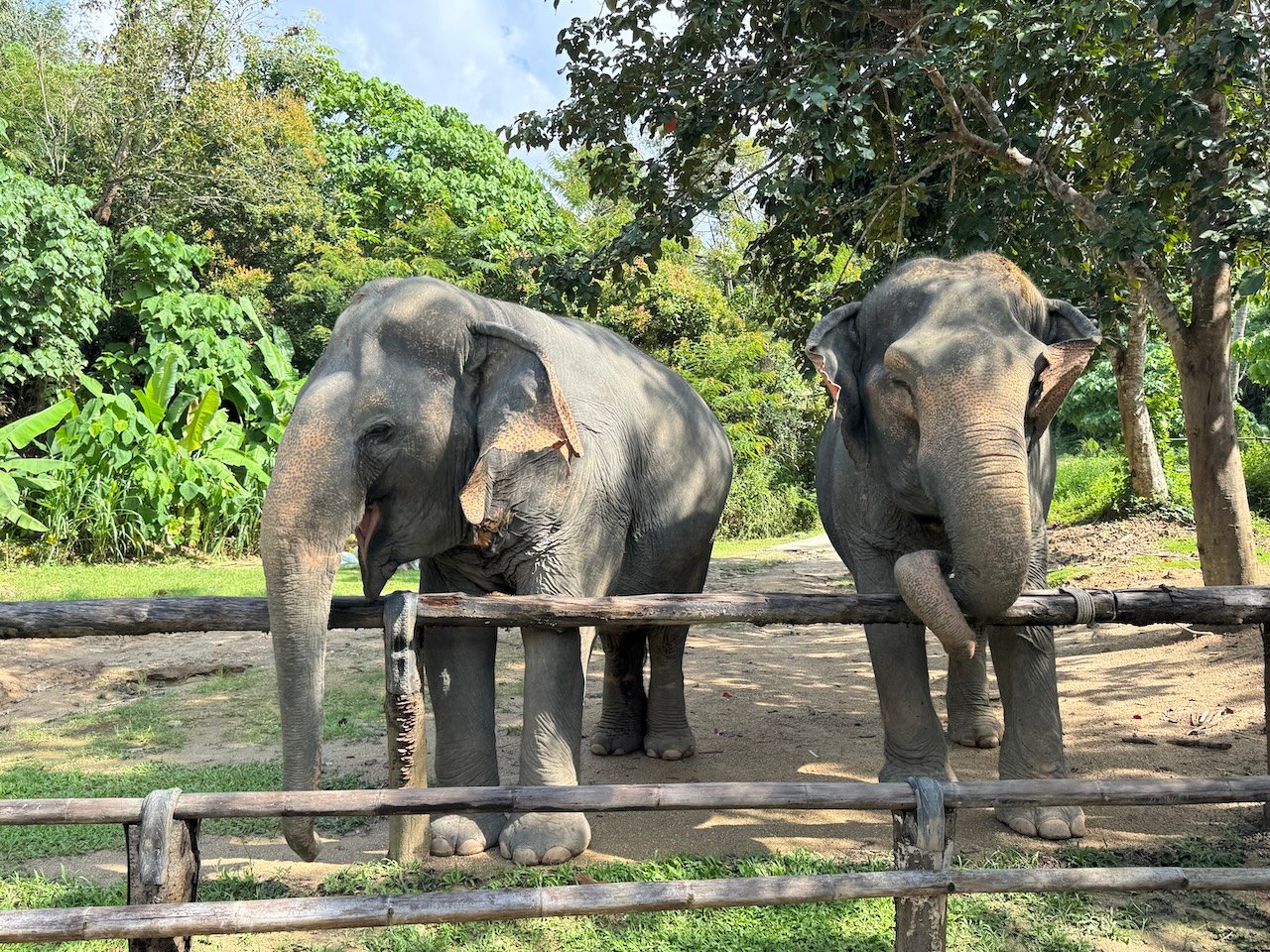
There’s several elephant reserves / sanctuaries based on the island of Phuket in Thailand. We researched the options thoroughly as we wanted an ethical experience and we absolutely nailed it with the Hidden Forest Elephant Reserve.
The Elephant Issue In Thailand
The majority of the elephants in captivity in Thailand were employed in the logging sector. Elephants are able to access the dense jungle of Thailand’s forests, and have the strength to drag large trees out into clearings to be collected by vehicles. Each elephant was partnered with a mahout, who lived and worked with the elephant from a young age. The mahout and the elephant would live in the jungle, deliberately isolated from other elephants, as a group would be difficult to control.
But the country’s logging industry was out of control, clearing vast swathes of forest, creating landslides and flooding. The government decided in 1989 to ban independent logging and overnight, the elephants and their mahouts were out of work. Many headed to the cities and turned their charges over to giving rides and / or performing tricks as entertainers.
Fortunately, various elephant sanctuaries have sprung up over the years to take on these elephants and allow them to enjoy their final years in peace and comfort. The hardest job is to get them socialised with other elephants, because for decades of their long lives, they have been kept away from others, and have only known humans. These elephants cannot be returned to the wild – they have never learned how to forage for food or herding instincts, and any that have been released into the wild have subsequently died. Bizarrely, the only way the sanctuaries can rescue the elephants is by buying them, and they cost around 20,000 USD each. Add in the cost of providing food for an animal that has to eat 10% of it’s body weight each day, and as you can imagine, the overheads are eye watering.
Fun Elephant Facts
1/ Elephants really are afraid of mice! In fact, they are afraid of anything small – this is because their eyesight is very poor, and they cannot lower their heads to look down, so they tend to “feel” their way forward with their trunks and feet. Anything small scurrying around those sensitive areas can cause them to panic.
2/ Elephants really “never forget.” It isn’t just a saying – the elephants trunk, it’s most important sensory organ, connects directly to the very large memory part of their huge brains. This was a protection mechanism – an elephant that eats something that makes them ill will never forget the smell and avoid it every time for the rest of their lives.
The Reserve
This elephant reserve started with the arrival of two ladies in November 2023. Nam Paerng (Honey) aged 59 years and Gaw Boon (Good Luck) aged 54 years. They’ve since been joined by six other female elephants, who are all adjusting to a slower pace of life in their beautiful retirement home. These elephants have spent decades in the logging industry and riding camps for tourists.
-
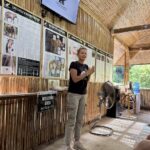
- Louise, a founder
-
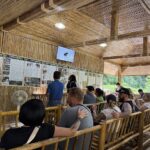
- Welcome area
-
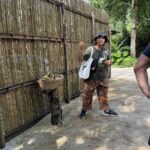
- Ann, our guide
The Hidden Forest Elephant Reserve was founded by Kong, Louise Rogerson and Russell Withers. We met Louise during our tour, she is very passionate about creating the right kind of elephant tourism in Thailand. It’s a tough problem to tackle, these captive elephants won’t survive in the wild, there have been programmes to try and every single elephant died. I truly hope that the way forward stems from elephant reserves founded on the same basis as the Hidden Forest. You won’t find any rides or bathing experiences here, the closest you get is a chance to feed bunches of bananas to these gentle giants – even then there’s no touching allowed. You simply hold out the bananas and let their truck curl around them, it’s one of their favourite snacks and the only personal encounter on this tour.
We booked the morning tour and arrived at the reserve for 9am where tea & coffee were waiting for us ahead of a short presentation about elephants and what to expect from our tour. The tour does include an uphill walk as you follow the elephants through their routine, it’s not too strenuous and the ground was firm underfoot. Umbrellas are provided for shade, shelter or walking sticks. There’s a cute gift shop which also helps fund the elephants care, no government funding is available.
After hand washing we approached the banana feeding area where two elephants ambled down the track to meet us. Gaw Boon (Good Luck) is the tallest of the elephants found here, she has the most incredible grey eyes and has 2 of the 7 features that determine a sacred white elephant. We had a big basket of full of bananas, so everyone had plenty of chances to hand feed the elephants who thoroughly enjoyed their favourite treat. We made our way up the lower slope of the hill to a seating area where the elephants walked right by us. Next we were invited to see the elephant bedrooms and rest huts for their mahouts who provide their 24 hour care.
-
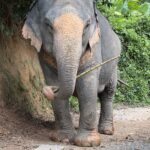
- Walking with sugar cane
-
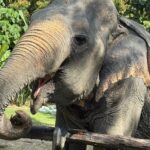
- Banana treat time
-
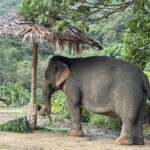
- Princess
-
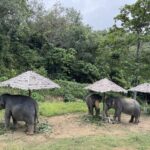
- Four friends
At the second seating area we overlooked some thatched umbrellas where the group of four elephant friends were tucking into a selection of leafy greens. It was interesting watching the elephants deftly pick up the greens before bashing them to soften and break them up before placing them in their mouths. Princess, the youngest was very amusing, she prefers to eat alone and part way through her feast she asked her mahout for water, he promptly brought the hose over to fill her trunk a couple of times. Once refreshed she demanded a change of food and a different selection of leaves was delivered. It was obvious who was in charge in this relationship!
We gradually followed the winding path up the hill to a shaded picnic area above two bathing pools. Here we were invited to help ourselves to a delicious buffet lunch that had been prepared for us by one of the mahout’s family. It included fried spring rolls, chips, massaman vegetarian curry and a salad. The drink was the local butterfly tea which is a stunning blue colour, which turns violet with a citrus squeeze of lemon/lime.
-
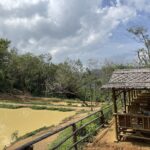
- Picnic & viewing area
-
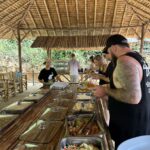
- Vegetarian buffet lunch
-
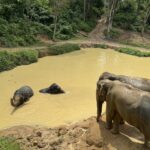
- To bathe or not
As we were dining the elephants arrived, left to their own devices they can decide if to bathe or not. One headed straight for the water and we were treated to a few fun displays of her squirting water from her trunk. The others hung around on the muddy banks, until a couple of others joined in. Princess got stuck into the mud, she was completely covered by the end and camouflaged into the background. Bathing helps the elephants to poop, you can see the floaters rise to the surface as they let it all go! Talking of poop, elephants hate it, they will go well out of their way to avoid another elephant’s poop.
We learned so much about these elephants from Ann our tour guide, she was very informative but also entertainingly funny. It’s beautiful to observe the daily routine of these retired ladies. Louise also explained how hard it is to decide which elephants to rescue, they have to consider the herd, their personalities and where the money paid for the elephant will go. They try to rescue elephants whose mahouts are retiring and need to provide for their family’s future, they don’t want to fund riding camps or other unethical tourist attractions.
Summary
We were both really moved by this visit – not just the efforts being made by the reserve to rehabilitate the animals, but also by the elephants themselves. They each have such a distinctive personality, and they epitomise the phrase “gentle giants.”
These elephants have given the best years of their lives working for men, and they deserve nothing more than the easy, peaceful lives they are enjoying now. If you’d like to support Hidden Forest Elephant Reserve, please book a visit directly with them when you’re in Thailand next.
Website: https://www.hiddenforestelephantreserve.com/